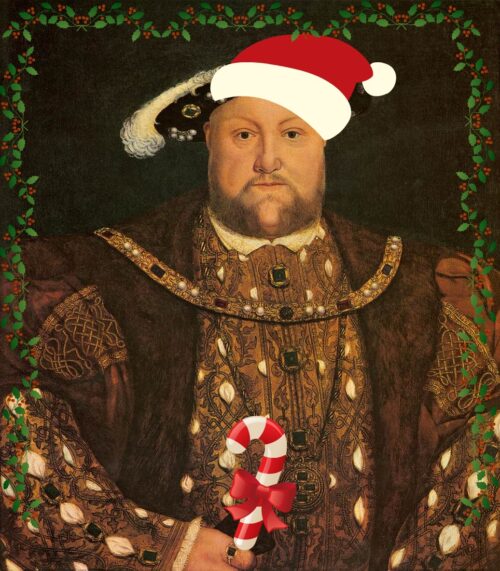
A Very Merry Tudor Christmas with Kirstie Bingham – Heritage Manager, John Moore Museum Tewkesbury
Kirstie spoke about the Christmas celebrations of Tudor times, their evolution and similarities and differences to now.
Christmas itself was enshrined in the time of Alfred the Great, as were the 11 days that followed. No free man could be compelled to work during this time, but obviously for most of the poorer peasant population, who were serfs, this didn’t apply.
Here are a few traditions and celebrations we learned about…
- Deck the Halls : bringing greenery into the house such as holly, ivy, mistletoe bay and rosemary – all with meaning and containing potentially goblins or evil spirits!
- Pucker up under the Kissing Bough- mistletoe hung in a wreath has long been the universal symbol of suspension of animosity
- Burning the Yule Log : a tradition with Viking roots , the Christmas tree being a tradition introduced from Germany in Victorian times. The log had to be large enough to burn in a great hall for 12 days, but as rooms became smaller during Henry VII’s time, as he introduced the privy chamber concept, the log also shrank.
- Telling Ghost Stories: during the 12 Days of Christmas the realm of evil had no power, including those spirits brought in with the greenery
- Lord of Misrule and his band- an excuse for revelry, including drummers, pipers and hobbyhorses which cavort about
- King Winter/ Yule Father who wore green in Tudor times, the red suit not being adopted until the 1860s
- Boy Bishops were installed – young men paid by the monarch to take services and give sermons from December 6th, St. Nicholas’ Day to December 28th , the Feast of Holy Innocents’ Day
- Christmas Carols came over from Italy but the first one written in English is dated to 1426
Here’s how some of the days were marked
December 25th Christmas Day
- Henry VIII favoured Hampton Court Palace and in 1509 spent the equivalent of £12 million on festivities. They would tuck into plum pudding as an appetiser, a Boar’s head as a starter, and then for the main course, a multitude of birds, including from 1526 turkey imported from the New World. Less well to do people might have had a pig, game bird or rabbit, but for most it was the usual daily fare. Brussel sprouts appeared from 1587. Dessert was a ‘mysnt pie’ -a rectangular pastry case filled with 13 ingredients to represent the characters in the nativity washed down with posset, lamb’s wool( ale and apple juice) or hippocras ( mulled wine).
December 26th – St Stephen’s Day
- A day for giving to the poor so the alms boxes in the churches were opened and the contents from the year distributed, hence the name we use now of Boxing Day.
December 27th – Feast of St John the Evangelist
- During this time we saw the introduction of wassail with a “toast “(bread in the base of a bowl of ale) It was also a time when violent or dangerous sport such as football or snapdragon were allowed as were masked singers and mummers
December 28th- Holy Innocents Day or Childermas
- This began as a day for the children whilst adults fasted and contemplated
December 31st
- This was not the countdown to the ‘New Year ‘ until 1752 when we switched to the Gregorian calendar : until then the first day of the year was March 25th! However there began the tradition of gift giving which during Henry VIII time became very competitive. He received gifts of monkeys, cheeses, hood for his hawks we know. He also showed his preference towards the future Queen, Anne Boleyn when he accepted her gift over that of Catherine of Aragon, his wife. Elizabeth I set a limit of £20 per courtier in her reign – about £4000 today. Resolutions were also made on this day.
January 6th /Epiphany or Twelfth Night
- Christ’s power over the goblins in the greenery, only lasts during this period- hence the tradition to remove decorations by then, although some say February 2nd or Candlemas is also acceptable as it marks 40 days after Christ’s birth and Mary’s cleansing to return into society
For the common man, the first Monday after this became known as Plough Monday, when the festivities came to an end and the ploughs were put to work again.
For the period known as the Commonwealth in England (1649 to 1660) under Oliver Cromwell, Christmas along with Easter and Whitsun was banned. Only Sunday was a holyday. Luckily for us, Charles II restored it when he became monarch but in Scotland it didn’t become a public holiday until 1958!
It was fascinating to hear at this time of year such detail and to understand how many of our traditions and celebrations came into being.
Sally Whyte
Publicity and Communications